2. Learn Your Options
After enrolling in Medicare, which pays 80% of your medical bills, you will need to decide how to cover the remaining 20%. This is one of the most important decisions you’ll make, because it affects not only your current costs, but also your long-term financial stability.
You have two primary paths to choose from.
One option is to stay with Original Medicare and add a Medicare Supplement plan, which helps cover the remaining 20% of medical expenses.
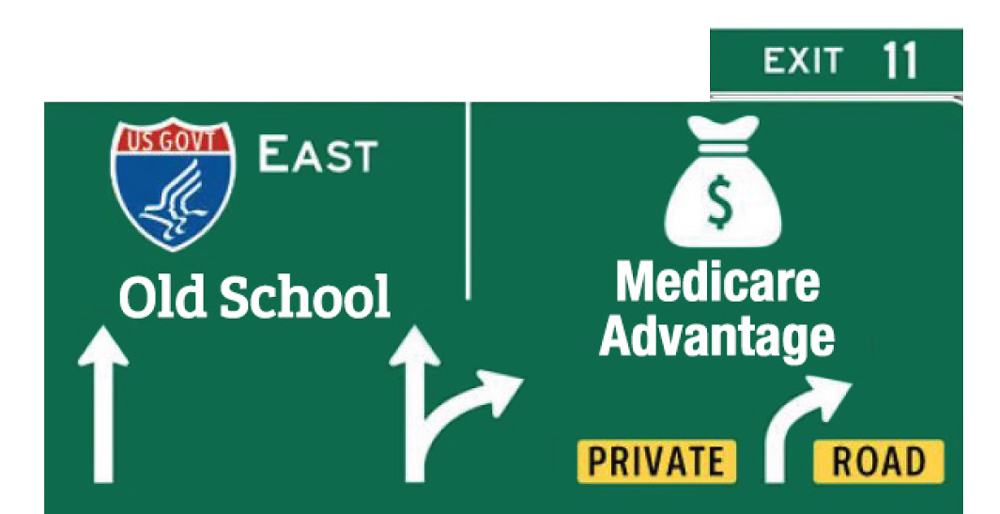
The other option is to choose a Medicare Advantage plan, which replaces Original Medicare with a bundled, all-in-one alternative offered through private insurance.
Both options work well but the premiums are dramatically different not only now but much more so in the future.
This decision isn’t just about today, it’s about your entire life journey. Choosing the wrong path could mean overpaying in one area while leaving yourself exposed in another. The goal is to understand how each option works so you can move forward with clarity and confidence.
Traditional G Supplement
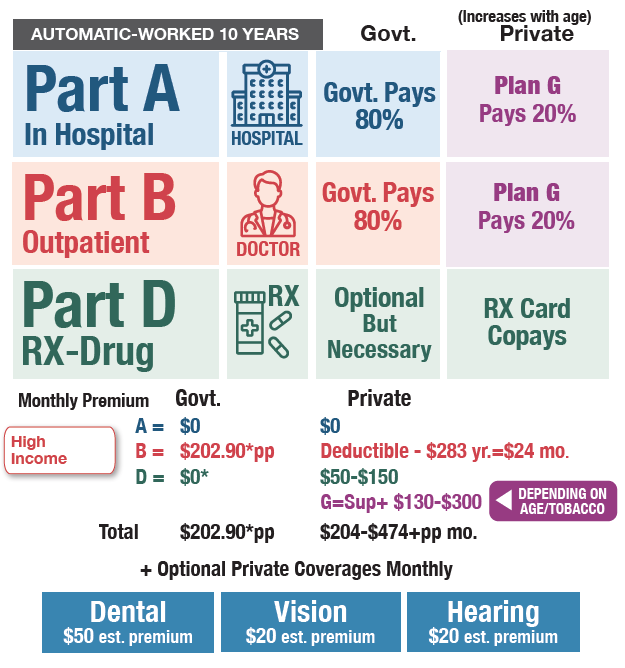
With this option, you keep Original Medicare (Parts A and B) and add a Medicare Supplement (Medigap) plan to help cover the remaining costs.
Medicare generally pays about 80% of approved services, and the supplement helps cover most or all of the remaining 20%, depending on the plan you choose.
✔ What it covers:
- Hospital and medical services (through Medicare)
- Most out-of-pocket costs (through Supplement)
- Nationwide access to doctors who accept Medicare
⚠ What it does NOT include:
- Prescription drugs (requires a separate Part D plan)
- Dental, vision, and hearing (separate coverage needed)
💡 Things to consider:
- Not only are initial premiums about $200-$300 higher per month, but they also increase each year.
- Premiums are unpredictable, generally doubling every 5-7 years. Rate increases amount to a doubling of rates by the early 70’s and again by age 80, making sustainability in question. Most people who pick this path end up on an Advantage plan by their mid 70’s due to rate increases & pre-existing conditions, making the Advantage plan their only real sustainable path.
- Moving from one Medicare supplement to another requires underwriting & is not guaranteed.
- Now in Texas and 5 other states, even traditional supplements have pre-authorizations.
Medicare Advantage (All-in-One Option)
Medicare Advantage plans replace Original Medicare with a bundled plan offered by private insurance companies.
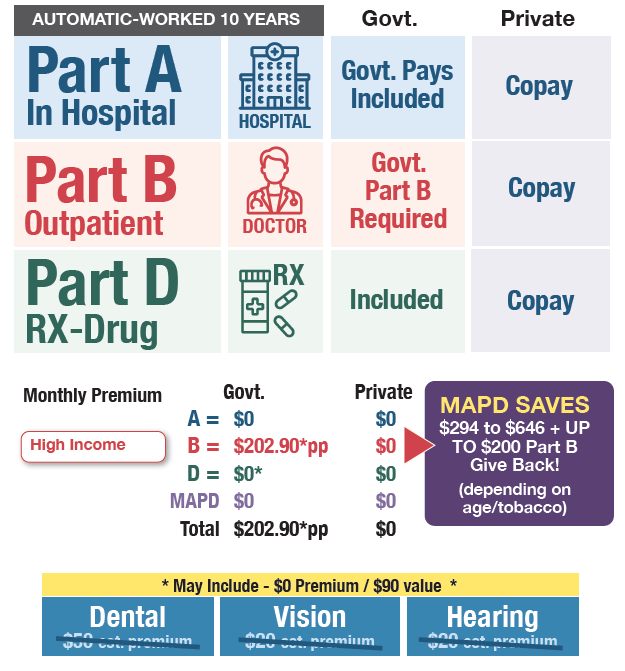
These plans combine hospital, medical, and often prescription drug coverage into one plan.
✔ What it often includes:
- Hospital and medical coverage
- Prescription drug coverage (Part D included in many plans)
- Additional benefits like dental, vision, and hearing
⚠ Things to understand:
- You typically pay copays when receiving services
- Plans may use networks (HMO or PPO)
- Costs can vary depending on how often you use care
💡 Things to consider:
- Monthly premiums can be low or even $0
- Costs are spread out as you use services
- Extra benefits may be included
- Flexibility may be more limited compared to Supplement plans
- Due to the popularity of Advantage, a secondary insurance plan to pay the $4000 to $7,000 a year out of pocket on copays has been established. These copay reimbursement plans are recommended and reduce or completely eliminate your out of pocket costs. The “gap” plans are generally guaranteed issue & affordable, usually in the $60 a month range.


The Real Difference Comes Down to This
Can you live with a network plan, just as under 65?
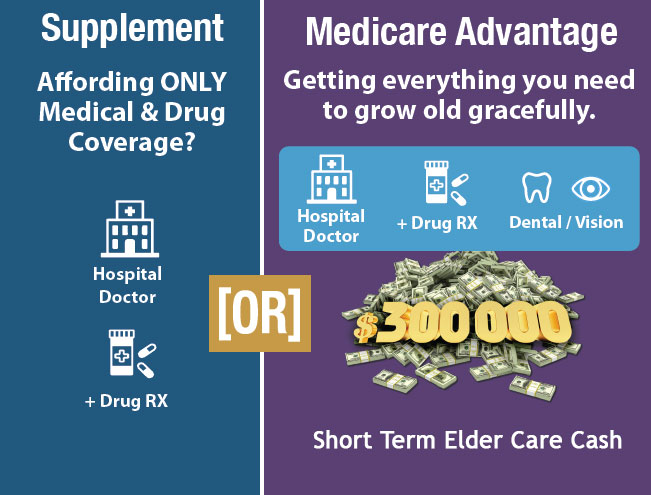
The premium savings make it possible to have $300,000+ insurance benefits. Take the stress off your family and preserve your retirement cash while improving your quality of life.
Today’s Medicare Landscape Has Changed
Healthcare rules and plan structures continue to evolve. Some differences between plans that once existed have become less pronounced, and both options now operate on more balanced ground than in the past.
Rather than focusing on which option is “better,” it’s more important to understand:
- How each plan works
- How your costs will change over time
- If your doctor is in network
The right decision depends on what fits your situation. If your doctor is in network, why pay more?

Ready to Compare the Details?
Now that you understand how each option works, the next step is to look deeper at the numbers, costs, and real-world examples.
In the next step, we’ll break down these options side-by-side so you can see exactly how they compare.